Category: The 1999 original

  • Bangkok Dangerous 1999 vs 2008: original and remake compared

    Bangkok Dangerous 1999 vs 2008: original and remake compared

    In short: the 1999 Bangkok Dangerous is a low-budget Thai film about a deaf-mute Thai hitman, Kong. The 2008 remake, by the same Pang brothers, stars Nicolas Cage as an American hitman, Joe, and makes his girlfriend deaf instead. The remake is glossier and more conventional; critics scored the original far higher.

    Few directors remake their own film for Hollywood. Oxide and Danny Pang did, and comparing the two versions shows what changes when a small Thai festival film becomes a $45 million star vehicle. This page sets the two side by side. For the full story of each, read our guides to the 1999 original and the 2008 remake. Sources are listed at the end.

    The two films side by side

    The table compares the basic facts, taken from Wikipedia’s entries on the 1999 film and the 2008 film.

    1999 original2008 remake
    DirectorsOxide and Danny PangOxide and Danny Pang
    ReleasedNovember 1, 1999 (Thailand)September 5, 2008 (US)
    Running time105 minutes100 minutes
    LanguageThaiEnglish and Thai
    The hitmanKong, a deaf-mute ThaiJoe, an American (Nicolas Cage)
    FonA pharmacistA deaf-mute pharmacist
    CinematographerDecha SrimantraDecha Srimantra
    MusicOrange MusicBrian Tyler
    BudgetNot publishedAbout $45 million
    Rotten Tomatoes53% (38 reviews)9% (92 reviews)
    Metacritic45 (12 critics)24 (16 critics)
    Main awardFIPRESCI prize, Toronto 2000None
    Two film clapperboards side by side on a table, one worn and one new
    The same directors made both versions nine years apart. Illustration.

    Why did the Pang brothers remake their own film?

    The remake started with Nicolas Cage. Variety reported in 2006 that his company, Saturn Films, had acquired the rights, with the twins attached to direct. By then the Pangs were known in Hollywood for The Eye (2002), whose US remake followed in 2008, and they were making The Messengers (2007) for a US studio, per Wikipedia. Wikipedia’s 1999 entry says the remake was announced at Cannes in 2006.

    For the brothers it was a chance to tell the story again with a much bigger budget. For Cage, it was a role and a producing credit in a genre he knew well.

    Two hands making a sign language gesture against a soft blurred background
    The deaf character moved from the hitman to his girlfriend. Illustration.

    The hitman and the deaf character

    The biggest difference is the hero. In 1999 the killer, Kong, is deaf and mute, and the film’s near-silent style follows him. A hitman is someone paid to kill, and the original’s version is a young man from the margins who finds a talent at a shooting range. In 2008, Kong survives only in name, as a street pickpocket played by Shahkrit Yamnarm whom Joe hires and mentors.

    The deafness moved to Fon. Oxide Pang told the New York Times in 2006 that the team decided to make the girlfriend deaf-mute in the new version. The Thai distributor’s notes on RYT9 say Charlie Yeung learned sign language for the role from Katitha Rattanasin of the National Association of the Deaf. The same notes say Shahkrit chose not to watch the original before filming.
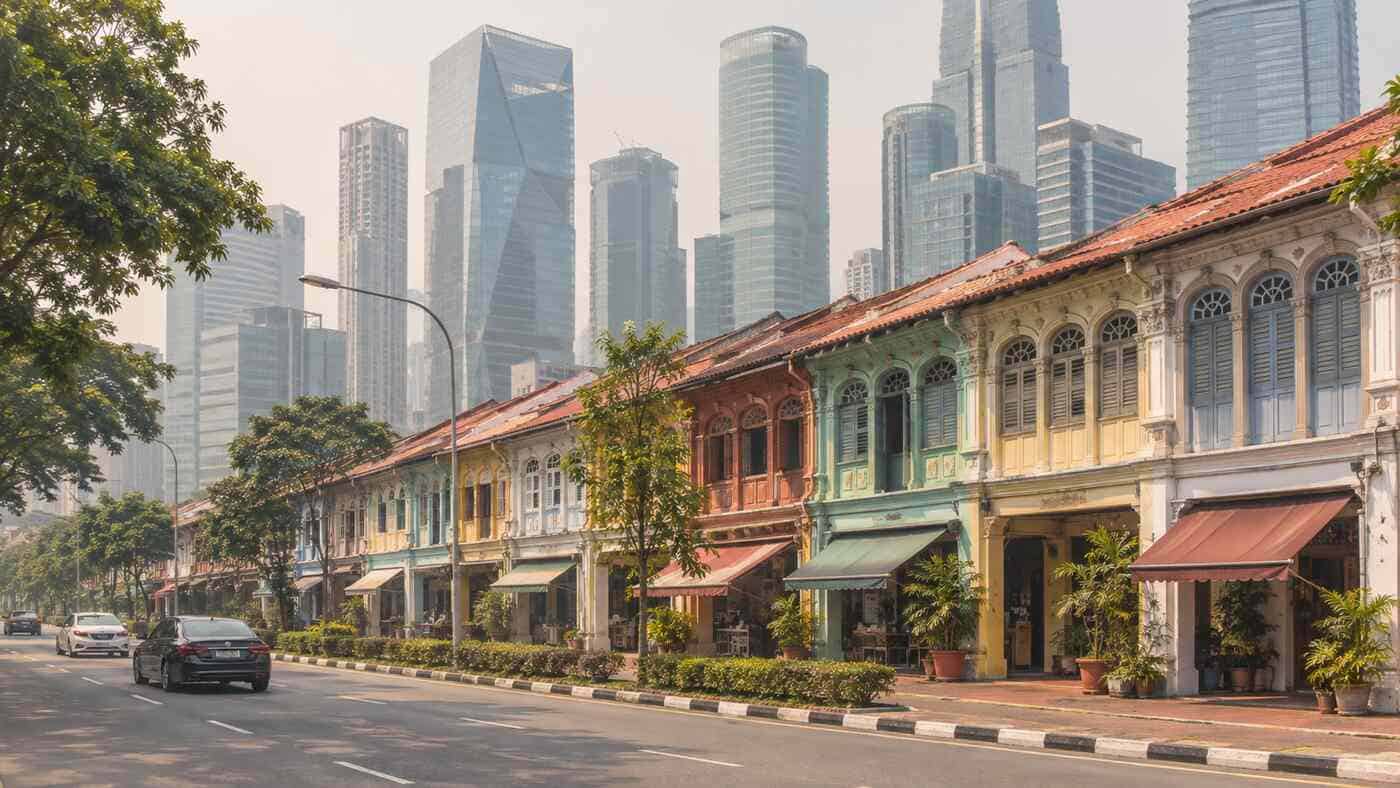
    A row of old shophouses in front of modern glass towers in a hot hazy city
    Bangkok changed a lot between the two shoots. Illustration.

    Two different Bangkoks

    The films also show different cities. The Telegraph argued that the 2008 version presents a glamorous Bangkok of river views and five-star hotels, where the original was grittier. It pointed out that the BTS Skytrain opened about a month after the 1999 premiere and the MRT subway in 2004, so the city itself had changed.

    The original is not all Bangkok either. Tony Rayns, in the NZIFF 2001 programme, noted a subway sequence shot in Hong Kong. The remake opens in Prague and travels to the Damnoen Saduak floating market and a cave temple in Phetchaburi. See our filming locations guide for the full list.

    Style and craft

    The 1999 film mixes black-and-white and colour footage, freeze frames and very little dialogue, according to the Los Angeles Times. Its leads were models rather than trained actors, and Oxide, a former colourist, shot and graded the images himself.

    The remake keeps one key collaborator, cinematographer Decha Srimantra, but follows the rhythm of a Hollywood thriller, with voice-over from Cage, set-piece hits and a score by Brian Tyler. Variety’s Jordan Mintzer called it a sanitised, tourist-friendly version with a postcard look, while praising the boat chase.

    A large professional cinema camera on a tripod in a dim studio
    Decha Srimantra photographed both films. Illustration.

    Reviews, awards and box office

    Critics clearly preferred the original. It won the FIPRESCI critics’ prize at Toronto in 2000 and was nominated at Rotterdam in 2001, according to Wikipedia. Its jury citation, quoted by the NZIFF, praised its eye for the sights and sounds of Bangkok.

    The remake had the bigger audience. It opened at No. 1 in the US with about $7.8 million and grossed about $42.5 million worldwide, per Wikipedia, but scored only 9% on Rotten Tomatoes and a C-minus CinemaScore.

    A desk with folded newspapers and a cup of coffee in morning light
    Critics rated the original far above the remake. Illustration.

    Which version should you watch first?

    If you want the film that made the Pangs’ name, start with 1999. It is shorter on plot and longer on mood, and it shows a Bangkok that has since changed. If you want a straightforward action film with a star, the 2008 version is easier going. Watching both shows how a story can be reshaped for a different market. Our guide to Oxide and Danny Pang’s films suggests what to watch next, and our list of movies filmed in Bangkok widens the view.

    Key takeaways

    • Both films were directed by Oxide and Danny Pang, nine years apart.
    • In 1999 the hitman is deaf-mute; in 2008 the deaf-mute character is his girlfriend, Fon.
    • The remake’s Bangkok is glossier, with river views and luxury hotels.
    • Decha Srimantra photographed both versions.
    • The original won the FIPRESCI prize; the remake topped the US box office but drew poor reviews.

    Common questions

    Is the 2008 Bangkok Dangerous a shot-for-shot remake?

    No. It keeps the basic idea of a hitman whose last jobs in Bangkok are undone by friendship and love, and it reuses character names such as Kong, Joe, Aom and Fon. But the roles change: the hitman becomes an American played by Nicolas Cage, and the deaf-mute character becomes his girlfriend.

    Did the same people make both films?

    Partly. Oxide and Danny Pang directed both, and Decha Srimantra was cinematographer on both. The cast, producers, writer and composer changed. The remake’s screenplay is credited to Jason Richman, its music to Brian Tyler, and it was produced by Nicolas Cage with Norman Golightly, William Sherak and Jason Shuman.

    Which version has better reviews?

    The original. It holds 53% on Rotten Tomatoes and 45 on Metacritic and won the FIPRESCI prize at Toronto in 2000. The remake holds 9% on Rotten Tomatoes and 24 on Metacritic. Variety’s review of the remake still praised its long-tail boat chase at the floating market.

    Why is Fon deaf in the remake?

    Oxide Pang told the New York Times in 2006 that the filmmakers moved the deaf-mute trait from the hitman to his girlfriend for the Hollywood version. Actress Charlie Yeung learned sign language for the part with help from Thailand’s National Association of the Deaf.

    How we put this together: we compared the two Wikipedia film entries for credits, dates and scores, then added production detail from Variety, the New York Times, the Thai distributor’s notes on RYT9, the Los Angeles Times, The Telegraph and the NZIFF programme. Judgements about style are the critics’ views, attributed by name.

    Sources

  • Bangkok Dangerous (1999): the Pang brothers’ original

    Bangkok Dangerous (1999): the Pang brothers’ original

    In short: Bangkok Dangerous (1999) is a Thai crime film and the first feature that Oxide and Danny Pang directed together. It follows Kong, a deaf-mute hitman in Bangkok. Produced by Nonzee Nimibutr and released by Film Bangkok on November 1, 1999, it won the FIPRESCI critics’ prize at Toronto in 2000 and was remade by Hollywood in 2008.

    Long before Nicolas Cage, there was the original. This guide to Bangkok Dangerous 1999, the Thai film that started the Pang brothers’ careers as directors, covers what it is about, who made it, why its style stood out and how critics received it. For the Hollywood version, see our guide to the 2008 film. Sources are listed at the end.

    What is Bangkok Dangerous (1999)?

    Bangkok Dangerous is a 1999 Thai action crime film written and directed by the Pang brothers, according to Wikipedia. It was their debut as a directing pair. It runs 105 minutes and was released in Thailand on November 1, 1999, by Film Bangkok. Its producers were Adirek Wattaleela, Nonzee Nimibutr, Pracha Maleenont and Brian L. Marcar. Decha Srimantra shot it, and the music is by Orange Music.

    The New Zealand International Film Festival, which screened it in 2001, lists it as a 35mm film with production design by Wut Chaosilp and Noppadol Nopsuwanchai.

    A 35mm film reel and strip of negative on an editing table
    The original was shot on 35mm film. Illustration.

    Story and cast

    Kong is a deaf-mute cleaner at a shooting range who turns out to be a gifted shot, because he does not flinch at gunfire. A hitman, Joe, and his girlfriend Aom, a dancer, take him into their trade, and Aom guides him on jobs. After a job in Hong Kong, Kong catches a cold, meets Fon at a pharmacy and starts to imagine a different life, but the violence of his work catches up with him. The cast and roles below come from Wikipedia.

    CharacterActor
    Kong, a deaf-mute hitmanPawalit Mongkolpisit
    FonPremsinee Ratanasopha
    AomPatharawarin Timkul
    JoePisek Intrakanchit

    The Los Angeles Times reported in 2001 that the lead actors were models the brothers had found through advertising work, not trained film actors.

    An empty indoor shooting range with paper targets under harsh light
    Kong is a deaf-mute hitman who learned his trade at a range. Illustration.

    How the film was made

    The Pangs were born in Hong Kong in 1965. The Los Angeles Times profile says Oxide worked as a colourist at Central Digital Pictures from 1989, moved to Thailand in 1992 and became a senior colourist at Kantana, while Danny worked as an editor at Star TV. The idea for Bangkok Dangerous came from a TV news report about a hired killer who cried.

    The same article says Nonzee Nimibutr produced the film and found the investors. Oxide chose the locations, shot the film and handled the colour, while Danny focused on pacing and editing. That division of work matches the way the brothers later described their method: Wikipedia’s Pang brothers entry quotes them saying that only one of them is on set at a time.

    An old television set showing static in a dim apartment
    The idea came from a TV news story about a killer who cried. Illustration.

    Why the style stood out

    A colourist is the person who sets the colour and tone of each shot after filming, and Oxide’s background shows on screen. The Los Angeles Times describes the film’s mix of black-and-white and colour footage, freeze frames and very little dialogue, which suits a hero who cannot speak. It also mentions a scene in which Kong watches a Charlie Chaplin film.

    Critic Tony Rayns, writing for the NZIFF programme, singled out a subway sequence shot in Hong Kong, a ghost scene in a Japanese restaurant and moments of silent comedy. Wikipedia notes that the finale is a shoot-out in a water bottle plant. The film shows a rougher, poorer city than the 2008 remake. Our comparison of the two versions sets out the differences side by side.

    Thai new wave cinema in the late 1990s

    Bangkok Dangerous belongs to a revival of Thai cinema after the 1997 Asian financial crisis. Wikipedia’s Cinema of Thailand entry names Nonzee Nimibutr, Pen-Ek Ratanaruang and Wisit Sasanatieng as leaders of the Thai New Wave. Nonzee’s Dang Bireley’s and Young Gangsters set a box office record of more than 75 million baht, and his Nang Nak earned 149.6 million baht. Adirek Wattaleela, a producer of Bangkok Dangerous, headed Film Bangkok.

    The scale of the revival was small at first. The Los Angeles Times reported that only 17 Thai films were made in 1997 and that American imports took 80% of the box office. Films like Bangkok Dangerous helped show that Thai productions could reach festival audiences abroad.

    An empty film festival hall with a lit screen and rows of seats
    The film won the FIPRESCI prize at Toronto in 2000. Illustration.

    Bangkok Dangerous 1999: reception and awards

    The film did well at festivals. According to Wikipedia, it won the FIPRESCI award from the international critics’ federation at the 2000 Toronto International Film Festival and was nominated for a Tiger Award at Rotterdam in 2001. The jury citation, quoted by the NZIFF, praised it as beautifully crafted, with a deft eye on the sights and sounds of Bangkok. IndieWire covered the prize in its Toronto 2000 report.

    Critical scores are mixed but far above the remake’s. Wikipedia reports 53% on Rotten Tomatoes from 38 reviews and a Metacritic score of 45 from 12 critics. It also notes that the Tamil film Pattiyal (2006) was inspired by Bangkok Dangerous, and that the Hollywood remake was announced at Cannes in 2006.

    Stacks of plastic water bottles in a dim industrial bottling plant
    The final shoot-out takes place in a water bottle plant. Illustration.

    What came next for the Pangs

    The success opened doors. The brothers’ horror film The Eye (2002) became an international hit and was remade in Hollywood in 2008, per Wikipedia. Both twins also made solo films, and Danny won Hong Kong Film Awards for editing. Our guide to Oxide and Danny Pang’s films follows their careers, and our list of movies filmed in Bangkok places the film among other screen portraits of the city.

    Key takeaways

    • Bangkok Dangerous (1999) is the Pang brothers’ first film as a directing team.
    • The hero, Kong, is a deaf-mute hitman played by Pawalit Mongkolpisit.
    • Nonzee Nimibutr produced it; Film Bangkok released it on November 1, 1999.
    • Its mix of black-and-white, colour and near-silent storytelling drew critics’ attention.
    • It won the FIPRESCI prize at Toronto in 2000 and was remade in Hollywood in 2008.

    Common questions

    Who is the hitman in the original Bangkok Dangerous?

    The hitman is Kong, a deaf-mute contract killer played by Pawalit Mongkolpisit. Unlike the 2008 remake, the killer is Thai and the story stays close to his point of view. A hitman, Joe, brings him into the trade, and Kong later falls for Fon, a pharmacist he meets when he catches a cold.

    Is Bangkok Dangerous 1999 in Thai?

    Yes. It is a Thai film, made in Thailand with a Thai cast, though its directors were born in Hong Kong. Because the hero cannot speak, much of the film has very little dialogue. It was released in Thailand on November 1, 1999, by Film Bangkok.

    What award did Bangkok Dangerous 1999 win?

    It won the FIPRESCI prize, given by the international federation of film critics, at the Toronto International Film Festival in 2000. The jury praised it as beautifully crafted, with a deft eye on the sights and sounds of Bangkok. It was also nominated for a Tiger Award at Rotterdam in 2001.

    Is the original better than the remake?

    That is a matter of taste, but critics preferred it. The 1999 film has a 53% Rotten Tomatoes score and a Metacritic score of 45, against 9% and 24 for the 2008 version. Reviewers of the remake, including Variety, called it a more polished but tamer take on the same story.

    How we put this together: credits, dates and scores come from Wikipedia’s entry on the 1999 film. Background on the brothers and the making of the film comes from a 2001 Los Angeles Times profile and the NZIFF 2001 programme note. Context on the Thai New Wave comes from Wikipedia’s Cinema of Thailand entry.

    Sources